
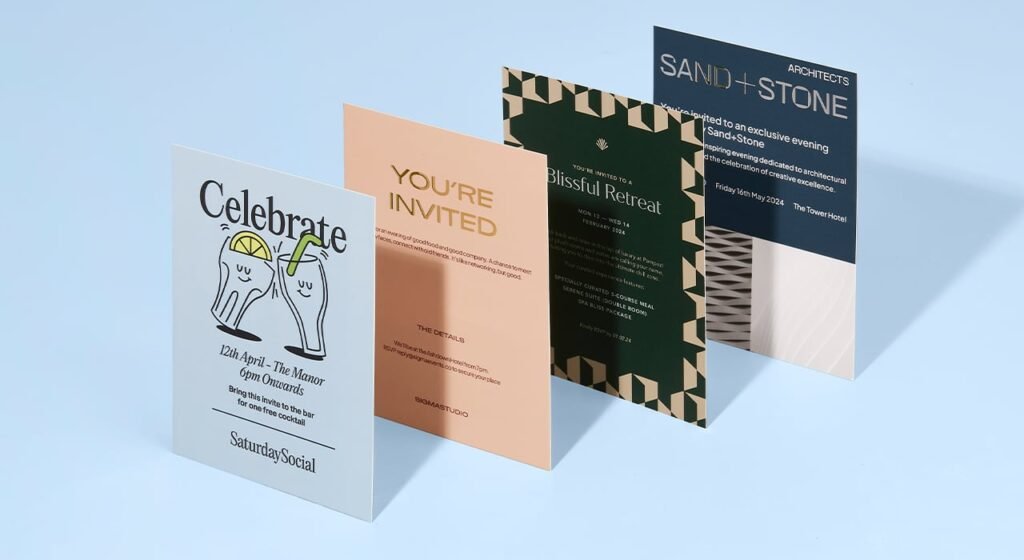
In today’s digital era, where social media events and email invites dominate event communication, print invitations continue to hold an irreplaceable place in personal and professional celebrations. Whether it’s a wedding, birthday party, gala, corporate event, or milestone celebration, print invitations offer a unique charm and emotional value that digital invitations often fail to deliver.
This article explores everything you need to know about print invitations — their history, importance, various types, design and printing options, the benefits of using them, and practical tips to create invitations that leave lasting impressions.
Introduction: What Are Print Invitations?
Print invitations are physical cards or folded documents designed to invite guests to an event. Traditionally, they contain key information such as the host, event date, time, venue, dress code, and RSVP details. Unlike electronic invites, print invitations are tangible—you can hold them, keep them, and often cherish them as keepsakes.
Despite the rise of digital communication, print invitations remain the gold standard for formal events and those seeking to make a meaningful impact. They symbolize effort, thoughtfulness, and add a layer of sophistication that text messages or emails cannot replicate.
Historical Background of Print Invitations
The tradition of sending invitations dates back centuries. In ancient societies, invitations were hand-delivered scrolls or messages for royal courts and nobility. With the invention of the printing press in the 15th century, printed invitations became accessible to more people.
The Victorian era popularized the use of elaborate stationery and calligraphy for invitations, particularly for weddings, balls, and social gatherings. Techniques such as engraving, embossing, and hand-lettering were widespread among the upper class.
Today, modern printing technology democratizes print invitations, offering endless design possibilities at various price points while maintaining the elegance and tradition of formal invites.
Types of Print Invitations for Different Occasions
Print invitations can be customized for virtually any event. Below are popular occasions that often call for printed invitations:
Wedding Invitations
Weddings are synonymous with printed invitations. From lavish suites featuring multiple inserts to minimalist cards, wedding invitations set the tone and style of the event. They often include RSVP cards, details about receptions, accommodations, and gift registries.
Birthday Invitations
Printed birthday invitations range from playful and colorful cards for kids to elegant designs for milestone birthdays like the 21st, 30th, or 50th celebrations. They often incorporate themes, photos, and personalization.
Corporate and Business Invitations
For company events, product launches, conferences, or award ceremonies, print invitations communicate professionalism and seriousness. They typically feature company logos, brand colors, and formal language.
Baby Showers and Gender Reveal Parties
Soft colors, cute graphics, and gentle typography characterize print invitations for baby showers. They invite close friends and family to share in the joyful anticipation.
Graduations and Anniversaries
Custom printed invitations for graduations or anniversaries reflect the accomplishment or milestone, often allowing inclusion of photos, timelines, or favorite quotes.
The Advantages of Print Invitations Over Digital Invites
Despite the ease and speed of digital invitations, print invitations offer distinct benefits:
Enhanced Personal Touch
A printed invitation shows thought and effort. It conveys that you value your guests enough to send something physical and special.
Tangibility and Keepsake Value
Physical invitations can be saved, displayed, or archived. They become memorabilia tied to the memories of the event.
Creates Anticipation and Excitement
Holding an elegant invitation builds excitement and expectation for the upcoming event in a way a digital notification rarely does.
Design and Tactile Experience
You can incorporate textures, embossing, foil stamping, and various finishes that create sensory experiences for your recipients.
More Formal and Traditional
For formal events like weddings, gala dinners, or black-tie affairs, print invitations often communicate the appropriate level of decorum.
Essential Elements of a Print Invitation
When designing or ordering print invitations, ensure your card contains these critical components:
- Host Name(s): Indicate who is hosting or inviting. This might be the couple, parents, or organization.
- Invitation Line: A phrase inviting the guest, like “You are cordially invited to…” or “Please join us…”
- Event Details: Date, day, time, and location.
- RSVP Instructions: How and by when guests should reply.
- Dress Code: Optional, but useful for formal or themed events.
- Additional Information: Directions, parking, accommodations, or requests (e.g., no gifts, bring a plus one).
Designing Print Invitations: Key Considerations
The design of your printed invitations can significantly influence guests’ impressions. Below are factors to consider:
Paper Choice
Quality paper reflects sophistication. Options range from standard cardstock to textured linen, handmade paper, cotton fiber, or recycled stocks. The weight and finish also influence feel and durability.
Typography
Fonts convey mood. Print Invitations Elegant scripts emphasize tradition and formality, while modern sans-serif fonts suit minimalist and contemporary themes. Pair fonts carefully for visual hierarchy.
Color
Choose colors that match your event theme or season. Metallic foils like gold, silver, rose gold, or copper add glamour. Neutral palettes with subtle contrasts emphasize refinement.
Printing Method
The printing technique affects cost, appearance, and tactile feel (more on this below).
Size and Shape
While standard sizes are convenient, unique shapes or folds can make your invitations more memorable. Consider square cards, gatefolds, or pocket invitations.
Imagery and Embellishments
Monograms, floral motifs, illustrations or photos personalize invitations. Embellishments like ribbons, wax seals, or vellum overlays add texture.
Popular Printing Techniques for Invitations
Your choice of printing method influences the look and feel of your invitations:
Digital Printing
Affordable for short runs, digital printing offers vibrant colors and photo-quality images. It’s ideal for small events or casual invitations.
Offset Printing
A traditional technique that produces sharp images and consistent colors, best suited for long print runs.
Letterpress
This technique involves pressing inked plates into thick paper, creating a debossed effect that’s tactile and elegant.
Foil Stamping
Adds metallic shine by applying foil with heat. It’s popular for names, borders, or embellishments.
Embossing and Debossing
Creates raised or recessed designs on paper, adding dimension without ink.
Thermography
A raised printing effect created by heat, providing a less expensive alternative to engraving.
How to Personalize and Customize Your Print Invitations
Creating truly standout print invitations is about personalization. Here are some creative ideas:
- Custom Artwork and Calligraphy: Commission unique illustrations or handwritten fonts for exclusivity.
- Multi-Card Suites: Use coordinating RSVP cards, maps, menus, or accommodation info to form a complete experience.
- Envelope Liners and Wax Seals: Add interest and elegance with printed liners or custom seal stamps.
- Specialty Paper and Edge Finishing: Introduce colored or deckled edges for added allure.
- Interactive Elements: Incorporate pull tabs, pop-ups, or translucent layers for surprising effects.
Practical Tips for Ordering and Sending Print Invitations
When planning your printed invitations, keep these tips in mind:
Start Early
Printing and mailing can take weeks. Start designing at least 2-3 months before the event date.
Budget for Quality
Good paper stock, printing, and extras cost money but impact presentation. Balance budget and quality wisely.
Proofread Thoroughly
Errors in names, addresses, or dates can be embarrassing and costly.
Mail Considerations
Don’t forget postage costs and envelope sizes affect mailing price. Factor these into your budget.
Track RSVPs
Include clear return instructions and consider digital RSVP options for convenience.
The Environmental Impact: Eco-Friendly Print Invitations
Sustainability is important when producing printed materials. To minimize environmental impact, consider:
- Using recycled or FSC-certified paper.
- Opting for soy-based, vegetable inks instead of petroleum-based.
- Choosing minimal packaging.
- Sending only essential quantities and encouraging careful guest lists.
Some printers even offer plantable seed paper invitations that grow flowers or herbs after use—creating a memorable gift and ecological positive impact.
Trends in Print Invitations (2025 and Beyond)
Event invitations continue to evolve in style and offerings:
- Minimalist and Clean: Simple typography and subtle colors to reflect modern elegance.
- Bold Patterns and Bright Colors: Statement invitations that catch the eye instantly.
- Mixed Materials: Wood, acrylic, and fabric invitations blending print with tactile uniqueness.
- Digital + Print Hybrid: QR codes leading to event websites or digital RSVP forms integrated into printed cards.
- Augmented Reality (AR): Invitations with AR features that guests can scan to see videos, maps, or 3D animations.
Conclusion: Why Print Invitations Still Matter
Printed invitations are more than just cards—they are the first impression of your event. They communicate formality, excitement, and appreciation. In an age of fleeting digital notifications, a well-crafted print invitation holds sentimental value and keepsakes that guests treasure.
From choosing premium paper to selecting the perfect printing technique, investing in high-quality print invitations enhances the entire event experience. For anyone organizing a wedding, party, corporate function, or any other special occasion, printed invitations remain a timeless and meaningful choice.